

Global Public Health Emergency: New Ebola Outbreak Detected
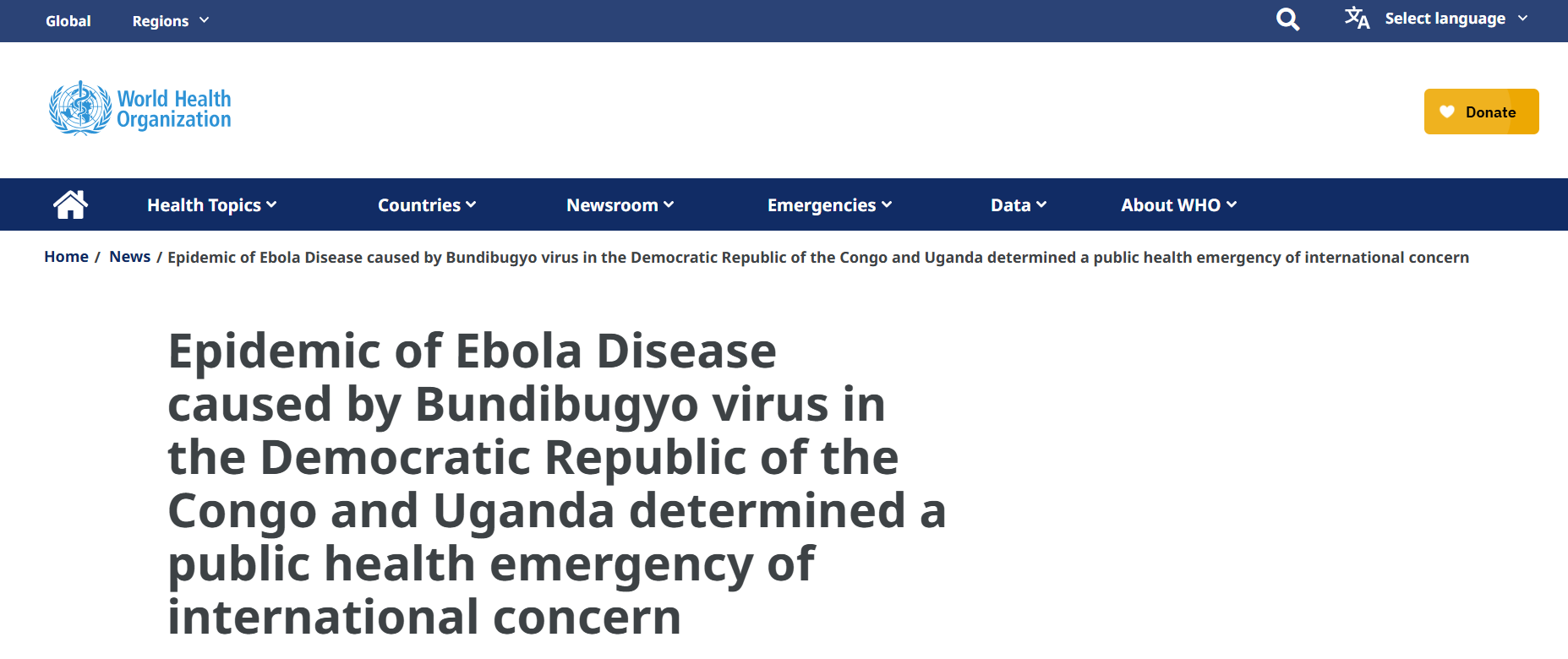
A new Ebola outbreak has emerged in the Democratic Republic of the Congo (DRC) within six months and spread rapidly to Uganda. The World Health Organization (WHO) has classified the outbreak as a Public Health Emergency of International Concern (PHEIC), caused by the highly pathogenic Bundibugyo ebolavirus.
This virus is highly transmissible and lethal with no approved specific vaccines or targeted treatments, posing an urgent global public health challenge.
Severe Epidemic Situation and Prevention Risks
As of May 16, Ituri Province in the DRC has reported 8 confirmed cases, 246 suspected cases, and 80 suspected deaths. The Africa CDC recorded 336 infections and 87 deaths. Uganda has confirmed 2 imported cases (1 death) with no epidemiological link between them, suggesting a possible hidden transmission chain.
At least four health workers have died in the affected areas, exposing weaknesses in healthcare-associated infection prevention and control. Political instability, frequent population movement, and widespread unregulated medical practice have led to a contact tracing rate of less than 30%. The WHO warns that the true scale of the outbreak is likely larger, with high risks of community and cross-border spread without timely intervention.
Key Characteristics of Bundibugyo Ebolavirus
Viral Properties
Bundibugyo ebolavirus belongs to the Filoviridae family and Ebolavirus genus. It is one of three Ebola virus species capable of causing large-scale epidemics. No licensed vaccine or specific medicine is available. The average fatality rate is 50%, reaching up to 90%.
Reservoir and Transmission
The natural reservoir is fruit bats of the Pteropodidae family. Humans are infected mainly through contact with blood, body fluids, secretions, or excreta of infected individuals, as well as contaminated materials or infected animal carcasses. Healthcare workers and family members face elevated risk, and nosocomial transmission has been confirmed in this outbreak.
Incubation and Symptoms
Incubation period: 2–21 days. Infected persons are not contagious before symptom onset.
Early symptoms include fever, fatigue, muscle pain, headache, and sore throat, easily misdiagnosed as influenza. Later symptoms involve vomiting, diarrhea, abdominal pain, rash, and organ dysfunction. Some patients develop internal and external hemorrhage in advanced stages.
Bundibugyo ebolavirus shows delayed hemorrhagic signs compared with other subtypes, making early identification more difficult.
Global and National Response
The Africa CDC has rated the outbreak risk in the DRC as very high and in East Africa as high.
The Chinese Embassy in the DRC has issued an urgent advisory urging citizens to avoid high-risk areas, reduce gatherings, and strengthen personal protection.
China CDC has enhanced entry health screening and port quarantine, and promoted cross-border information sharing and collaboration.
XABT Solution for Pathogen Surveillance
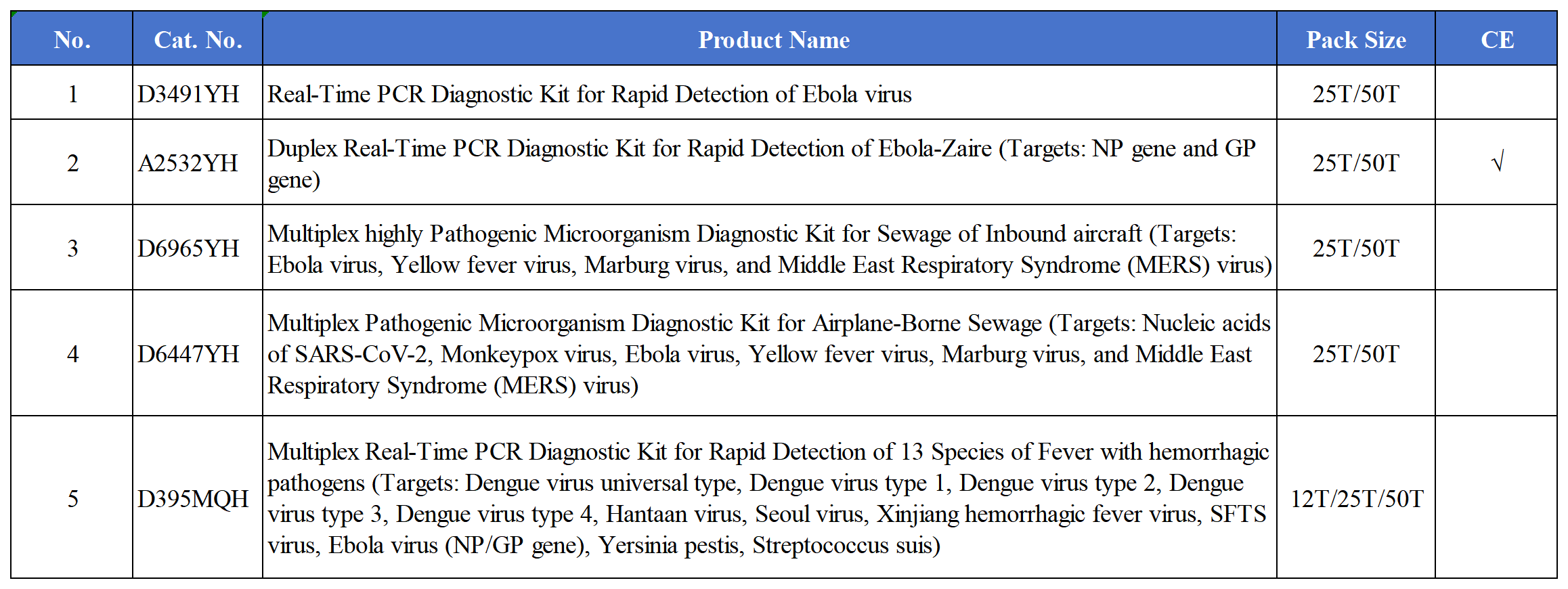
XABT provides a full-scenario pathogen monitoring solution based on multiplex target nucleic acid detection kits, enabling accurate and rapid detection of pathogen nucleic acids for efficient infectious disease screening and identification. It supports CDCs, port inspection and quarantine institutions, and other agencies in epidemic surveillance, risk assessment, and emergency response with reliable technical support.

Customer service consultation:+ 86-10-8193-7740
Contact Email:christian@x-abt.com
working hours:9:00-17:30

FOCUS ON US